01 · Treatment
Complete necessary care
Extensive dental treatment may be consolidated into fewer visits when appropriate.

At BigHorn Surgery Center, anesthesia, physiologic monitoring, perioperative nursing, and recovery are integrated into each surgical visit for patients undergoing dentistry or oral and maxillofacial surgery.
General anesthesia can allow extensive treatment to be completed in fewer visits and allows patients to remain unaware of the procedure while care is performed. Patients then recover in a dedicated setting under close observation.
This approach can be valuable for young children, patients with special healthcare needs, individuals with significant dental anxiety or difficulty tolerating office-based treatment, and patients undergoing extensive dentistry or oral and maxillofacial surgery.
Extensive dental treatment may be consolidated into fewer visits when appropriate.
General anesthesia allows treatment to be completed without conscious awareness of the procedure.
Patients are monitored closely as they wake from anesthesia in a private recovery setting.
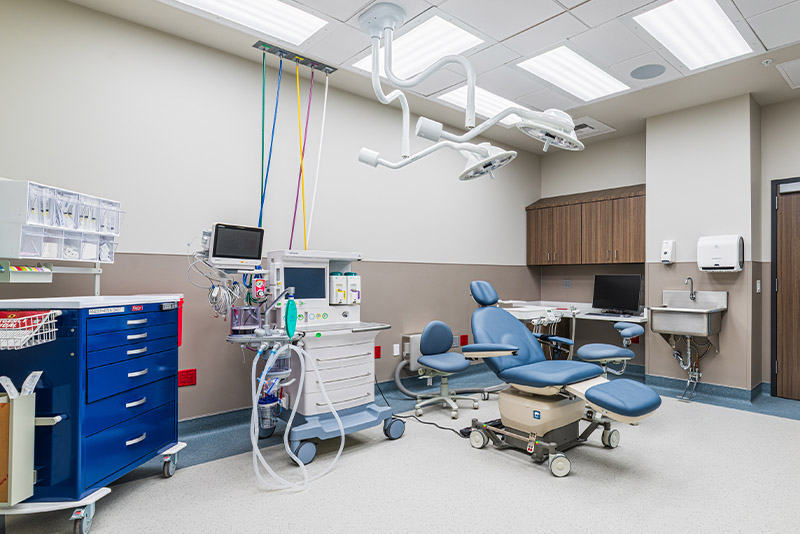
Anesthesia care at BigHorn Surgery Center is provided by residency-trained doctors with advanced specialty training in anesthesia, working alongside experienced perioperative nurses and the treating dentist or oral and maxillofacial surgeon.
The anesthesia plan is individualized to the patient and procedure, with physiologic monitoring and perioperative nursing integrated from preparation through recovery.
BigHorn Surgery Center is Joint Commission accredited and follows rigorous standards supporting patient safety and clinical readiness.
Accreditation reflects established standards for quality and safety in the ambulatory care environment.
BHSC safety standards include emergency preparedness and malignant hyperthermia crisis response.
Infection-prevention practices are part of the center’s surgical safety standards.
Staff credentialing and training are included in the center’s quality and safety program.
Anesthesia-supported care can benefit children, patients with special healthcare needs, individuals with significant dental anxiety or difficulty tolerating office-based treatment, and patients undergoing extensive dentistry or oral and maxillofacial surgery. BHSC provides the surgical environment, anesthesia care, monitoring, nursing support, and recovery resources needed to coordinate these cases in one setting.

After the procedure, patients recover under the supervision of the clinical team and are discharged when appropriate recovery criteria have been met.
Staff closely monitor the patient as the effects of anesthesia begin to wear off.
The facility provides dedicated recovery areas for observation following anesthesia.
Discharge occurs when appropriate recovery criteria are met, followed by instructions for continued recovery at home.
Review patient and caregiver instructions before the day of surgery, including fasting, medications, transportation, and recovery guidance.